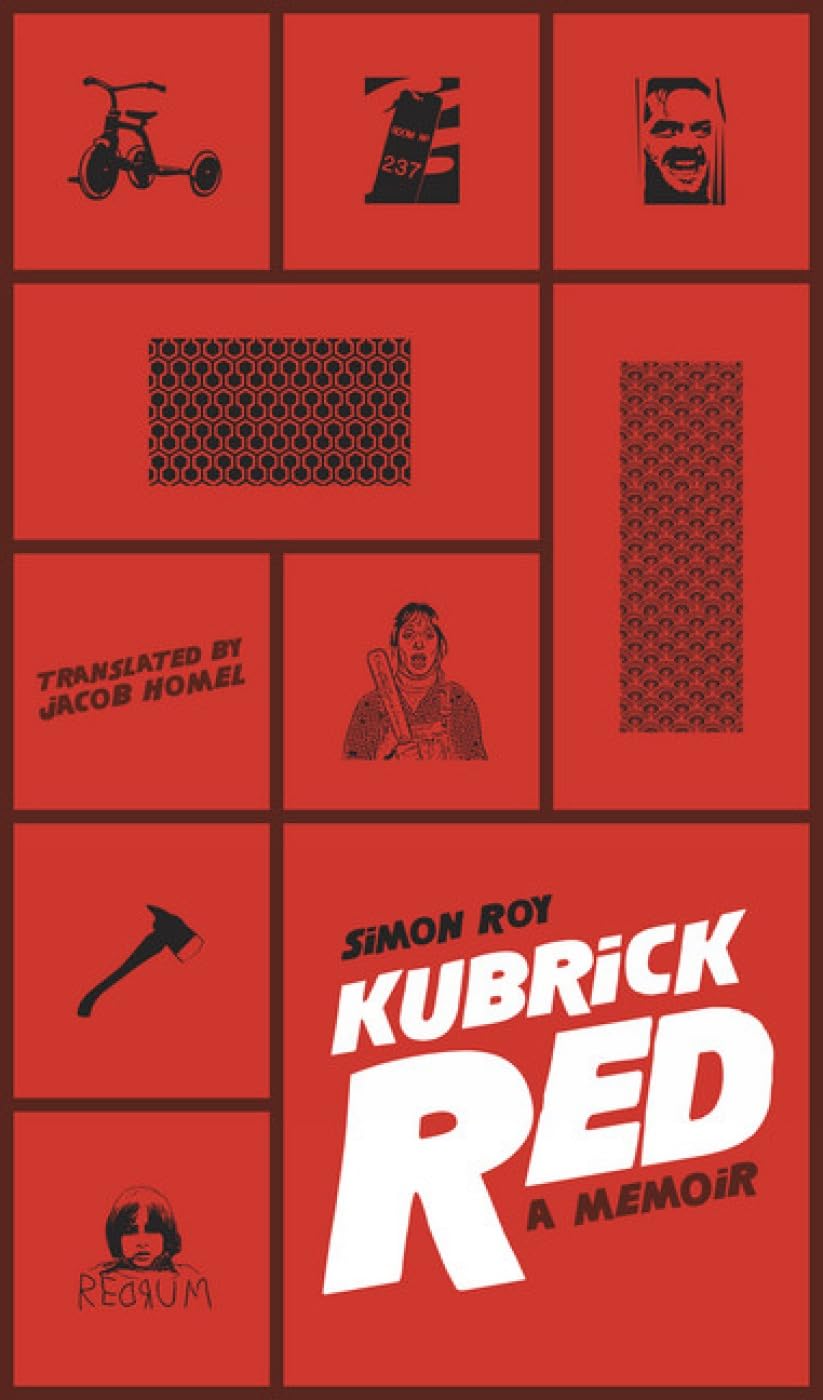
Kubrick Red
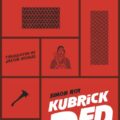
When he was 10 years old, Simon Roy was home alone in Quebec skipping through the TV channels when he alighted on a scene from a film where a man is showing a woman and her young son around a huge food storeroom in a hotel and, as he’s showing them around, he telepathically asks the young boy, ‘How’d you like some ice cream, Doc?’ Freaked out, Roy ran to a house on the other side of the street where his mother was playing cards with neighbours. The movie was The Shining and this first viewing started a lifelong obsession with the movie.
Richard Skinner reviews Kubrick Red by Simon Roy.
Drippings
There is still a bit, I tell him, just a little bit, left in me, trickling out, it’s still trickling out of me, but soon there won’t be any left. It’s leaking, I tell him, the person sat opposite, trickling away, down my leg, pooling around my feet and across the pavement. It’s all that’s left of me, this trickling, and once it’s all trickled away there won’t be anything more. All that I’ll leave of me will be the puddle I leave behind. I’ll leave all that’s left of me behind on the ground. The ground: a fitting place for something fallen. It’s where I stand. It’s where I leak. It is where I speak and walk. As I walk, I speak, and as I speak, I trickle away, bit by bit. They’re the two things I’m still capable of doing, walking and speaking, though with each step and each word I lose a part of myself, leaking out, drop by drop. There isn’t much of me left. But while some remains, there remain some things for me to do. All I can do is speak and walk, all I am are steps and words.
A short story by Sam Glover.
Yellow Bucket is for Kitchens
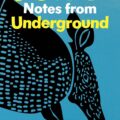
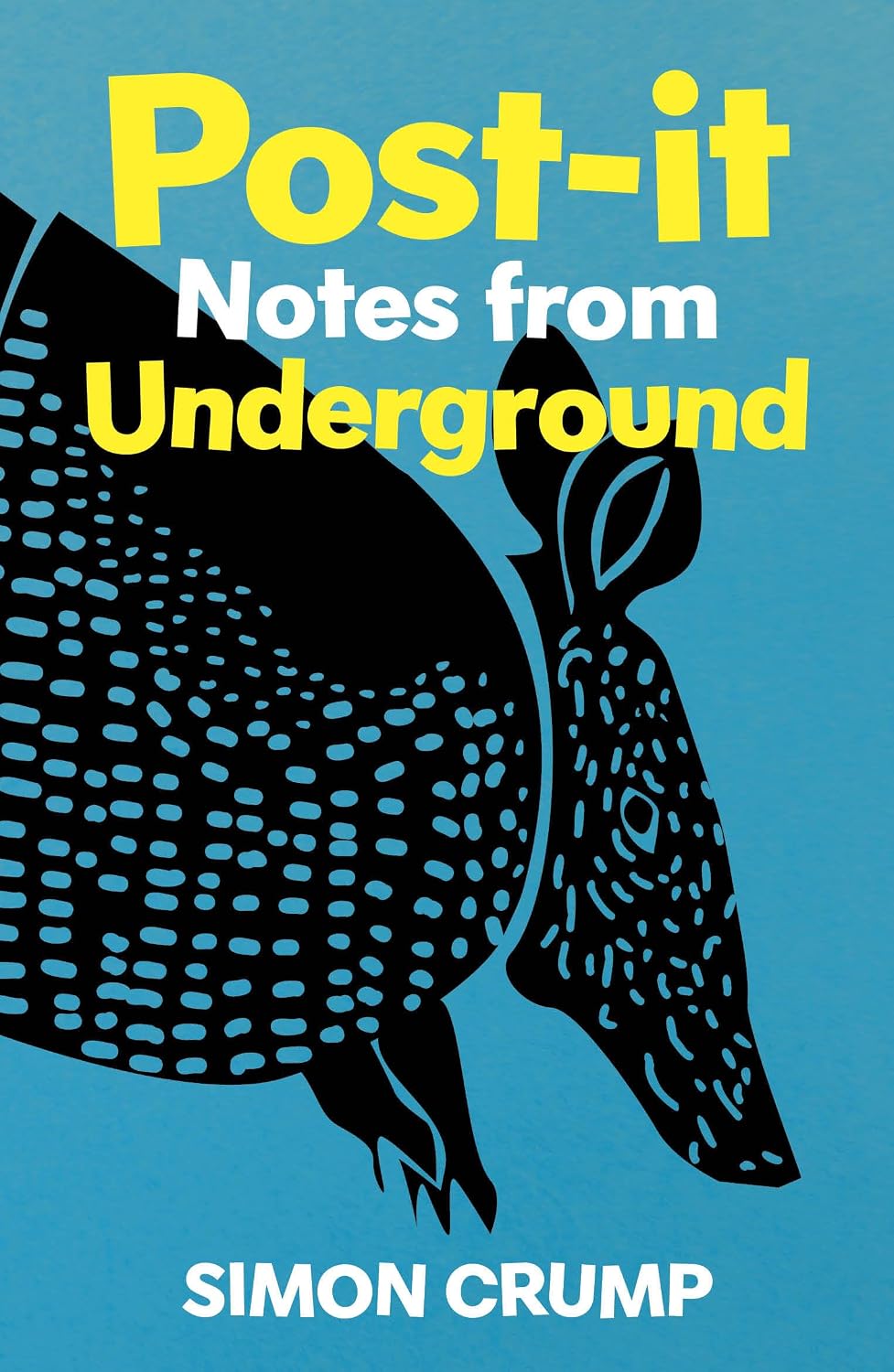
Post-it Notes from Underground is not without drudge, humiliation and desperation (“I’m 64 and I’m doing this job”, Simon frequently intones), but what could easily have been a dispatch from the cold terrain of capitalist realism quickly becomes, in Crump’s telling, a good humoured, excellently unpretentious object lesson in communality and daily solidarity. Simon and his “little team” (or rather the team that quickly welcomes him, with all good grace, as a member), form the core of the book. Their “bunker”, a windowless tea-point that’s used for fugitive “half-time” cuppas, is a place of refreshingly non-toxic banter and mutual support. It’s also where the book’s titular post-it notes appear.
James Riley reviews Post-it Notes from Underground by Simon Crump.
Photographing Phantasma
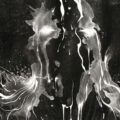
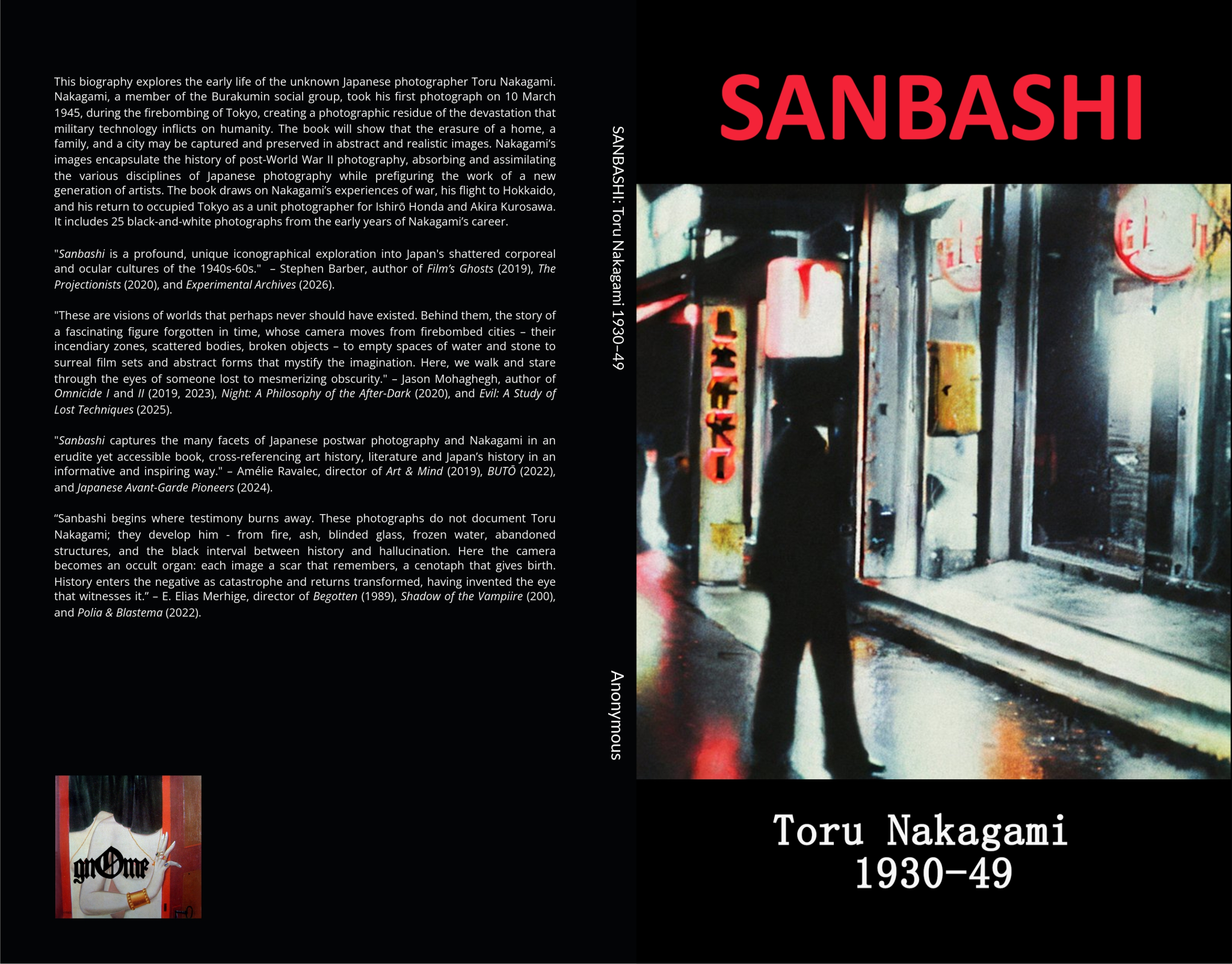
Last week, I received in the post a slim anonymous biography of an unknown – at least to me and until now – Japanese photographer, Toru Nakagami. The stamps and postmark were obscured and smudged, and I found no documentation within. Apparently born into the outcast Burakumin social group, Nakagami took his first photograph on March 10, 1945, amid the firebombing of Tokyo, capturing a dark photographic residue of the devastation humanity – in possession of devastating military technology – inflicts upon itself. The early images show how the total erasure of home, family, and city can be preserved in both realistic and abstract images and can, with some manipulation of mimesis, act as a primal surrogate for other acts of death and destruction – Vietnam, Iraq, Iran.
Steve Finbow reviews Sanbashi: Toru Nakagami 1930-49.

Five Pink Ducks
Birthdays make room for hyperbole. Lee wants to use M’s as an excuse to write something worthy of the feelings she’s been harboring for her: Thank you for being the brightest star in my solar system. But when she considered tracing those words on the blank inside of the card before her, they sounded too familiar. Lee googled to see if that particular phrasing had already been Hallmarked, and it turns out, no. It turns out, the brightest star in the solar system is the sun. She thinks she knew that, but the syntax swayed her toward star.
A short story by Madeleine Parsons.
Me & Tina
Twenty-three days into the 1980s & Dad gripped Mum’s hand as she screamed, the midwife continuing her calm advice on how to breathe, how to push, how Mum should try & do both while not ripping her perineum during my little sister’s home birth, with me there too, I was, or nearly, in the next room, safe in the cuddle of Mum’s friend Shirl, neither of us watching the turned-right-up TV from the room’s two-seater sofa, the other armchair & the coffee table’s mug-ringed frosted glass & Shirl breathlessly repeating It’s okay Jackie, Mummy’s not being hurt, a lie as obvious as those from the evening news, not that I knew what was true as Tina’s first cry rang angry through our first-floor Warner flat on Newport Road in Leyton.
A short story by Jack Houston.

Who’s To Say?: Life and Form in Life of M
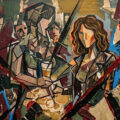
This latest work is in some sense “about” a movie star; at any rate, it’s the angle that Cusk’s publishers (understandably) and critics (less understandably) have worked in their selling and reading of the book. It’s an approach that misses rather more than it captures, however, especially when leading to interpretations of the book that posit Cusk’s project as one uninterested in, say, character — or even in being a novel at all. One thing to say from the outset is that we’re not going to talk about movie stars, either generically or specifically, in relation to Life of M; or about which particular movie star might have waltzed through the cosmic background of Cusk’s own writing process in crafting it. We’re not interested in fame, here; we’re interested in art — and it’s been a very long time indeed since those difficult neighbours shared an address.
D. W. White on Life of M by Rachel Cusk.

What Do We Really Know of Birds and Men?
The man is a rough bastard, a brute. And yet Stuart seems so preoccupied with the fact that “I did nothing to make Dad proud of me in his lifetime.” There is something devastating in this. The desire for a father’s approval seems to survive even when the father himself offers so little to emulate. Perhaps this is where the birds become so important. They offer another kind of inheritance, another way of understanding survival, freedom, instinct and masculinity — one that exists beyond the limitations of the father.
Elte Rauch reviews Fledgling by Josh Holton.

The Surviving Cells (Extract)
Even after her husband died, she did not get mad, did not sue the hospital for negligence, or write any of the doctors a spiteful email. She just took the bad news home with her and lived with it. Now she has even brought her son back to the same doctor, after everything that happened to his father. What is wrong with this family? You would think they would at least get a second opinion, or try their luck with someone else. Who knows why they are really here? Maybe Dr Jovanovic is the only doctor available on their insurance plan. Maybe they have been forced into dealing with the exact person now who could not save the father back then. But Ana did not pick up any hostile feelings in their previous meetings. They just seemed sad, resigned, and wisely guarding their strength, not wasting valuable energy on an argument they would never win.
Read an extract from The Surviving Cells by Brian Willems.

South Side Stories
The new kid Herman had this proud smile of rotting teeth. We were in the second grade and my teeth were crooked. I was embarrassed to smile. Herman’s teeth were falling out of his head, but he didn’t care what anyone thought. The teacher sat Herman next to me and he soon passed me a copy of Mad. I spent the next week reading it to pieces. We laughed at his collection of Garbage Pail Kids cards. We became friends with few questions asked. We traded numbers and started calling each other at home. He called Grandma’s house and asked, “What’re you doing?” I rarely had an answer that interested him. “Do you have a TV?” he asked. The basement had a TV, Uncle Val’s old set. “Yeah,” I told Herman, “I got a TV.” “Okay,” he said, “now go turn it on.” I hopped up on the arm of the couch and hit the power button. “Okay,” I said, “it’s on.” He told me to go to channel 99. “Channel 99,” I said, “that’s gonna take forever.” The TV in the basement didn’t have a remote, so you had to smash buttons up or down. “Not if you go backwards,” Herman said. “Huh,” I said. “Yeah,” Herman said. “Hit the down button like you’re going to channel three, but keep going. My brother showed me this trick.” I smashed the down button as quickly as I could. The channels flitted by. When I got to channel two and hit the button again, there it was: channel 99. Like magic. But the channel was dead. Grandma didn’t pay for channel 99. It was all static, but there were figures moving in it like people dancing in a hard rain. “You get there yet?” Herman asked. “Yeah,” I said, “I’m there, but I can’t see anything.” “Turn up the volume, but not too loud,” he said, “and put your ear to the speaker.” I pressed the volume button, notching it up one bar at a time. I pressed my ear to the speaker and listened. A saxophone, women moaning. “You hear it?” Herman asked. “I hear it,” I said. He giggled. “What is it?” I asked. There was a pause and all was mysterious and forbidden. Herman said, “It’s sex.”
Short stories by Ed Komenda.

Zizek at the Cricket Club
On Thursday we went down with some friends for a chicken burger and chips. At 8 o’clock, they pick a name at random from the membership list and if you’re in the club, you win a grand, so the place was chocka. We sat in the back room, where the old people gather to talk about Reform and I felt as I usually feel at the club, self-conscious and chippy. Then, waiting at the bar for a consolatory whisky, I saw it. At a table in the corner of the room, a white-haired woman sat on her own. In front of her, alongside a glass of bottled beer, there was a book face down on the table. Its cover was white and the name of the author clear: Zizek. I started. Stared, grinned, gormless. A reader? Reading Zizek? At the cricket club? What were the chances?
By Charlie Hill.

Off Grid
It’s a sky-blue day. Fern leaves spike as I wade in. Strands of grasses and stray ears of wheat weave. Nubs of rosehips bristle on hedges. From the thick nettles bunched around my knees, I could make soup. I could use dandelions even if the blackberries are frizzled after months of sunshine. Warm days slouch as we settle in, plant and sow. Next spring, Olly says, we’ll reap the bounty. Then we’ll eat like kings.
A short story by Deirdre Shanahan.